Introduction and history
Celeriac (Apium graveolens var. rapaceum), also known as turnip-rooted celery or knob celery, is a root vegetable prized for its knobby, bulbous stem and celery-like flavour. Though not indigenous to South Africa, it has found its way into local gardens thanks to its unique taste and versatility in the kitchen. Originating from the Mediterranean and Europe, celeriac has been cultivated for centuries as both a food and medicinal plant.
This biennial vegetable is popular among South African gardeners for its ability to thrive in cooler seasons and its valuable nutritional profile. If you’re looking to add something a little different to your veggie patch, celeriac offers a tasty way to enjoy the crunch and aroma of celery with the heartiness of a root vegetable.
💊 Medicinal Benefits
- Rich in antioxidants which may support overall health
- High in dietary fibre, potentially aiding digestion
- Traditionally used for supporting digestive wellness
- May help reduce inflammation due to its nutrients
While these benefits are promising, always remember celeriac is best appreciated as part of a balanced diet and not a replacement for professional health advice.
📅 When to Plant in South Africa
| Province | Best sowing months | Best transplanting months | Notes |
|—————- |——————–|—————————|———————————–|
| Western Cape | March to May | Coastal mild winters, frost possible inland |
| Eastern Cape | March to May | Coastal and inland variation |
| Northern Cape | March to April | Dry climate, keep soil moist |
| Free State | March to April | Frost risk, protect seedlings |
| KwaZulu-Natal | March to May | Humid coastal areas, partial shade beneficial |
| Gauteng | March to May | Frost risk, seedlings need protection |
| Mpumalanga | March to May | Warm to mild climate |
| Limpopo | March to May | Warmer, partial shade recommended |
| North West | March to April | Dry, protect from heat stress |
If not planting directly, then transplant 6-8 weeks after sowing
🏡 Where to Plant
Celeriac grows best in well-prepared garden beds but can also do well in large containers (minimum 20 litres) to accommodate its large root. Choose a protected spot away from strong winds as the plant can be sensitive to damage. A greenhouse or cold frame is useful for starting seedlings early in the cooler months and for protecting young plants from frost or harsh sun.
Microclimates with some afternoon shade can help prevent bolting and keep the plants healthy, especially in hotter interior regions.
🌞 Soil, Water & Sunlight Requirements
✅ Soil: Well-draining, fertile soil rich in organic matter is essential. Avoid heavy clay and waterlogged spots. Adding compost before planting boosts growth.
✅ Sunlight: Full sun to partial shade works well. In warmer regions, some afternoon shade helps prevent stress and premature bolting.
✅ Water: Keep the soil consistently moist with regular watering. Mulching helps retain moisture and keeps roots cool.
✅ Fertilize: Feed every 3-4 weeks with a balanced organic fertilizer or compost tea to support steady growth.
✅ Spacing: Plant seedlings 10-15 cm apart in rows spaced about 30 cm to allow room for the bulky root to develop.
✅ Seeds germinate: Typically 14-21 days at 15-20°C. Soil temperature is important for good germination.
✅ Transplanting: Transplant seedlings at 6-8 weeks old after hardening off (gradually exposing them to outdoor conditions over 7-10 days).
✅ Maturity height: Plants reach about 30-60 cm tall depending on variety and conditions.
✅ Varieties of the vegetable and easiest/hardest one to grow:
– ‘Brilliant’ (Easiest – reliable root development, good flavour)
– ‘Diamant’ (Good for cooler climates)
– ‘Giant Prague’ (Largest root, requires more space)
– ‘Monarch’ (Harder to grow, sensitive to heat and bolting)
🍓 Flowers & Fruit
Celeriac is a biennial and will flower in its second year if left in the ground, producing small white umbels similar to celery. In home gardens, it is usually grown for the root and harvested before flowering.
To prevent bolting (going to seed early), maintain consistent moisture, avoid heat stress by providing shade during hot spells, and harvest roots promptly once mature. Bolting results in woody roots and bitter flavour.
🌼 Companion Plants
Good companions for celeriac include:
– Beans (fix nitrogen)
– Onions and garlic (repel aphids)
– Leeks (pest deterrent)
– Spinach (shade and ground cover)
– Lettuce (shade and moisture retention)
– Marigolds (repel nematodes and pests)
– Nasturtiums (trap pests and attract pollinators)
Avoid planting near:
– Potatoes (compete for nutrients and attract similar pests)
– Carrots (attract carrot rust fly which also attacks celeriac)
🐛 Common Pests
- Aphids: Spray with neem oil or insecticidal soap; encourage ladybirds.
- Carrot rust fly: Use floating row covers and crop rotation.
- Slugs and snails: Handpick or use organic baits.
- Leaf miners: Remove affected leaves and use neem spray.
Maintaining healthy plants with good airflow and clean garden hygiene reduces pest problems.
🧺 Harvesting
Celeriac is ready to harvest 120-150 days after sowing, usually late winter to early spring in South Africa. The root should be about the size of a grapefruit, firm and smooth.
Harvest in the morning after soil has dried a bit for best flavour and storage. Pull gently or dig carefully to avoid damaging the root. Celeriac is not a cut-and-come-again vegetable since the edible part is the root.
🫙 Storage
Fresh celeriac stores well in the fridge wrapped loosely in a paper towel inside a plastic bag for up to 3 weeks. Avoid washing before storing to prevent rot.
For longer storage, celeriac can be peeled, chopped and frozen. It can also be roasted or boiled and then frozen for convenience. Drying is not common due to texture loss.
🧪 How to Use as Medicine
Celeriac may support digestion and inflammation management. Here are safe ways to try it:
- Celeriac tea: Peel and chop 1-2 teaspoons of celeriac root, steep in 1 cup boiling water for 10 minutes. Drink up to twice daily.
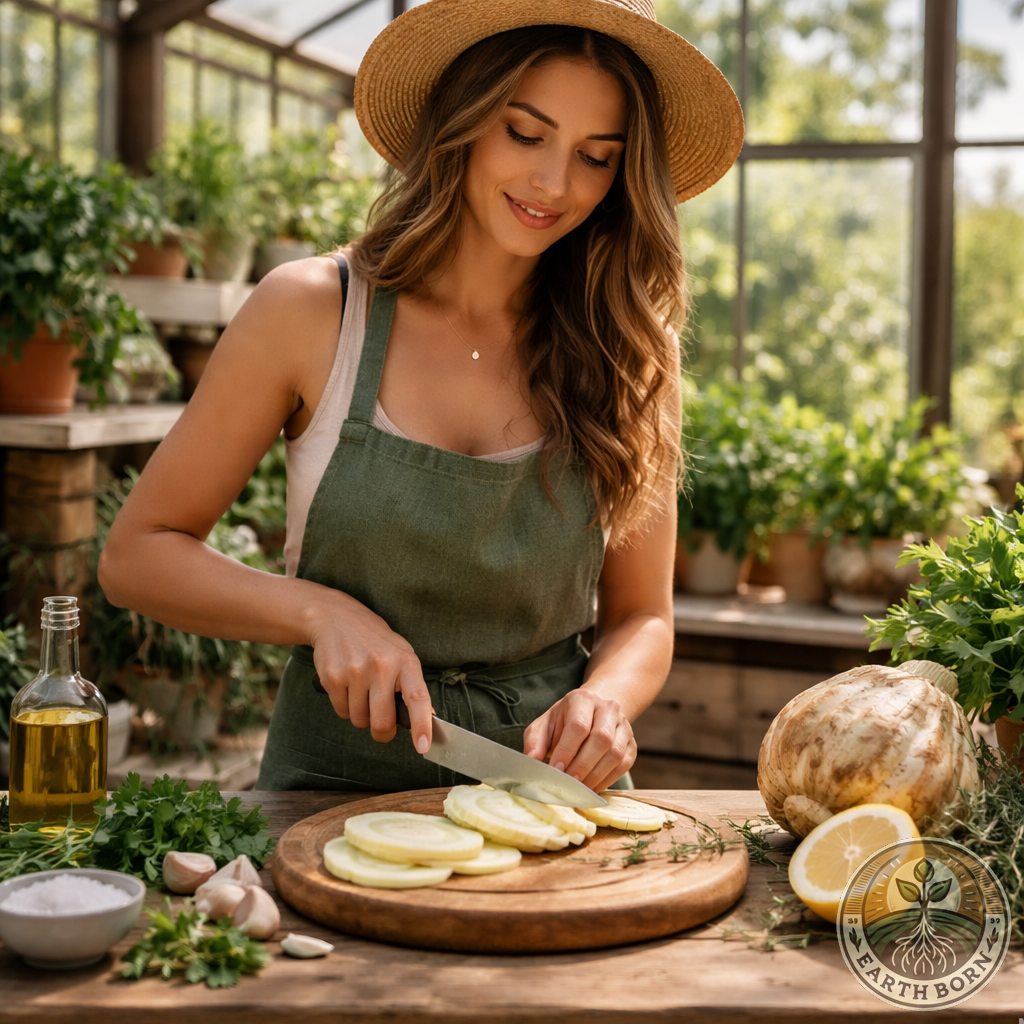
- Raw snack: Thinly slice raw celeriac and eat with a little lemon juice to aid digestion.
- Vegetable broth: Include celeriac in soups to enjoy its nutrients gently infused.
- Poultice: Cook, mash and cool the root, then apply externally for minor skin irritation (test patch first).
Start with small amounts to check tolerance. Avoid during pregnancy or if on blood pressure or diuretic medication unless advised by a healthcare professional.
💊 Benefits of eating organic verses store bought
- Fresher taste and higher nutrient retention
- Reduced pesticide and chemical residues
- Supports soil health and biodiversity by avoiding synthetic chemicals
- Encourages local growers and sustainable farming
- Often picked at peak ripeness, not prematurely for transport
- Helps maintain seed diversity through home saving
- Reduces carbon footprint from transport and packaging
🎉 Fun Fact
Celeriac’s knobbly, rough root looks quite odd compared to other vegetables, but it’s sometimes called “knob celery” because the edible part is that large, swollen stem base – a true underground celery!
⚠️ Caution
Though generally safe to eat, some people may be allergic to celeriac or related Apiaceae family plants. It contains natural compounds that could interact with blood pressure or diuretic medications. Pregnant and breastfeeding women should consult a healthcare provider before medicinal use. Always seek advice from a qualified herbalist or medical professional before using celeriac therapeutically.
📣 Call to action
Share your favorite recipe/remedy that uses Celeriac 👇