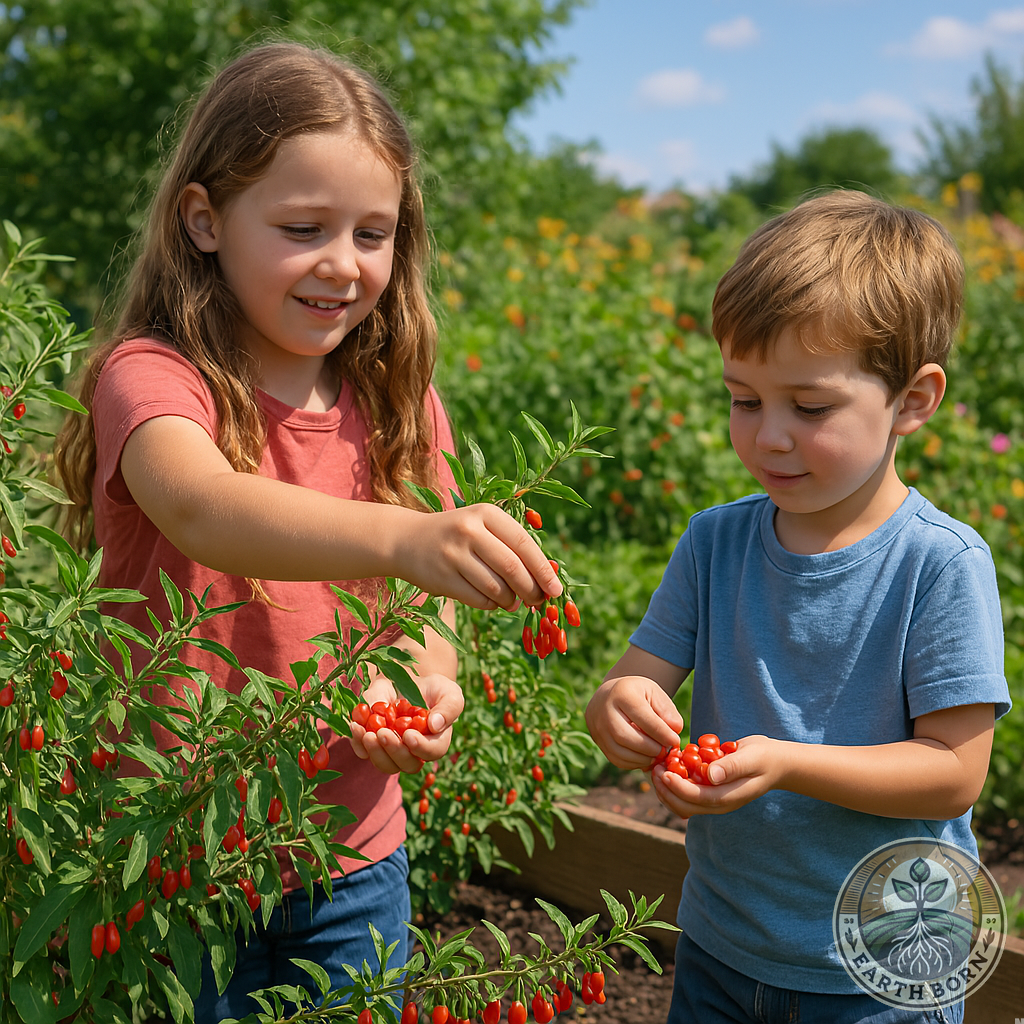
Goji berries, also known as wolfberries, are bright red, nutrient-rich fruits celebrated in traditional Chinese medicine for centuries. These hardy shrubs are not only packed with antioxidants and vitamins, but also make a striking and fruitful addition to your Earthborn garden.
💊 Medicinal Benefits
Goji berries are revered for their wide range of medicinal benefits:
-
🌟 Boosts immunity thanks to high antioxidant levels (notably zeaxanthin and beta-carotene).
-
👁️ Supports eye health and may protect against age-related eye conditions.
-
❤️ Improves cardiovascular health by reducing inflammation and oxidative stress.
-
🌿 Enhances mood and energy due to adaptogenic properties.
⚠️ Note: Goji berries may interact with blood thinners like warfarin and medications for diabetes or blood pressure. Always consult a health professional before adding to your regular routine.
📅 When to Plant in South Africa
In South Africa, plant Goji berries in early to mid-spring (August to October). For best results, start seeds indoors 8–10 weeks before transplanting outdoors once the danger of frost has passed.
🏡 Where to Plant
Choose a sunny, open location—either in raised beds, along fences, or directly into garden soil. Goji berries prefer room to sprawl and benefit from support structures like a trellis.
☀️ Soil, Water & Sunlight Requirements
-
Sunlight: Full sun (6+ hours daily)
-
Soil: Well-drained, loamy soil rich in compost or aged manure (pH 6.5–7.0)
-
Watering: Keep soil evenly moist, especially while young. Once established, Goji is drought-tolerant but thrives with regular deep watering.
📏 Spacing & Growth Habits
-
Spacing: 1–1.5 meters (3–5 feet) apart
-
Height: Up to 2–3 meters when mature
-
Harvest Time: Fruits appear in the second or third year, typically between late summer and early autumn.
To harvest: Pick berries once they turn bright red and slightly soft. Fresh berries can be eaten raw or dried for teas, smoothies, or snacks.
🌼 Flowers & Fruit
-
Flowers: Small, purple, trumpet-shaped blooms appear in spring and attract pollinators.
-
Fruit: Elongated red berries rich in juice and packed with nutrients.
🦋 Companion Plants & Common Pests
Best companions:
-
🌼 Marigolds – repel nematodes and aphids
-
🌿 Basil – deters spider mites
-
🌱 Chives – repels pests and enhances flavor of nearby herbs
Watch for:
-
🐜 Aphids
-
🕷️ Spider mites
-
🐛 Powdery mildew in humid conditions
Spray neem oil or diluted garlic water as a natural pesticide if pests appear.
🎉 Fun Fact!
In traditional Chinese folklore, Goji berries are called the “fruit of longevity” and were eaten daily by monks who lived well beyond 100 years.
📣 Summary & Call to Action
Whether you’re drawn to their sweet-tart flavor or healing legacy, Goji berries are a brilliant addition to your home apothecary garden. With patience and care, these resilient plants will reward you with a powerful, health-giving harvest.
Ready to grow your own red gems of wellness? Tag us @EarthbornAfrica and show us your Goji garden!