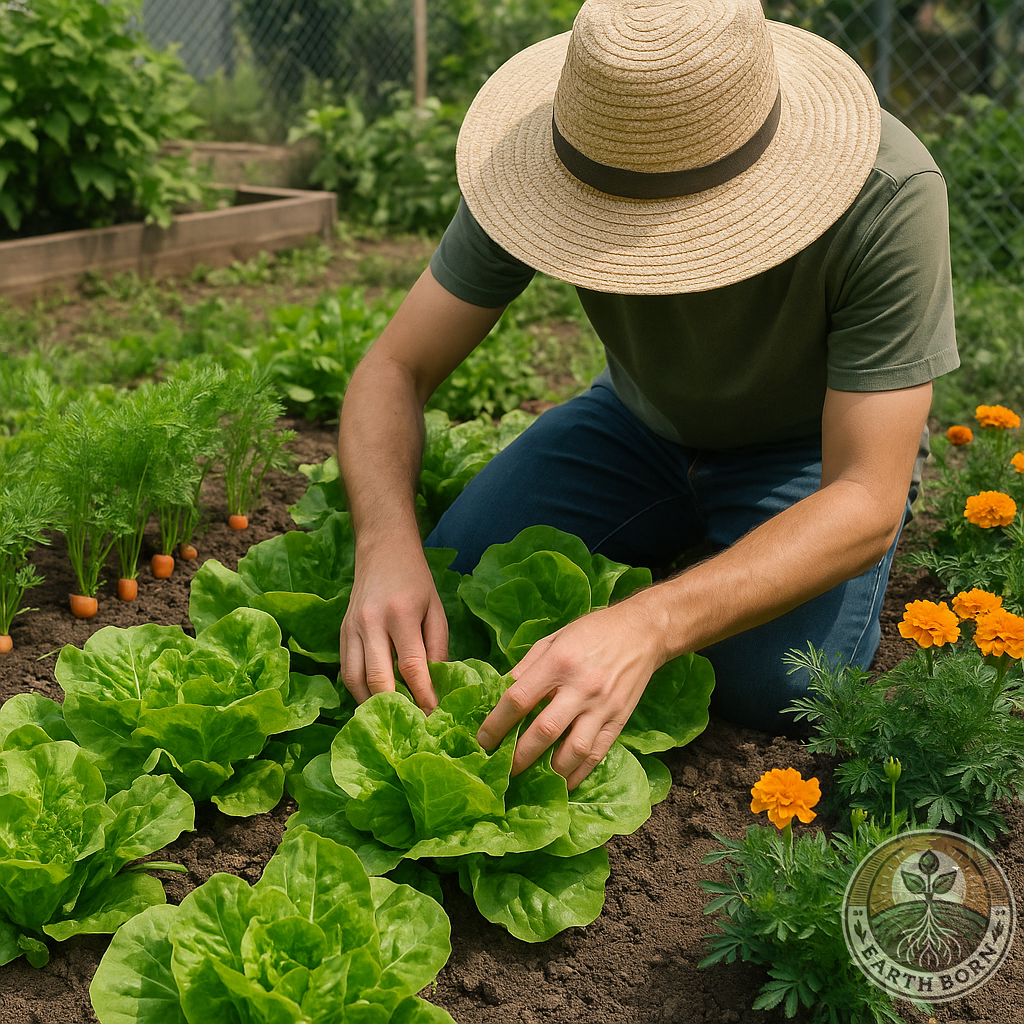
🌱 Introduction and history
Lettuce (Lactuca sativa) is a cool-season leafy green that has nourished civilizations for thousands of years. Originally cultivated in ancient Egypt over 4,000 years ago, it was prized for both its oil-rich seeds and edible leaves. From Egypt, it spread to the Greeks and Romans, eventually becoming a staple in kitchens across the world. Today, it’s celebrated for its crisp texture, subtle flavor, and ease of cultivation — making it a beloved plant for beginner and seasoned gardeners alike.
💊 Medicinal Benefits
Lettuce is more than just salad filler — it holds mild medicinal value. The milky sap in the stems, known as lactucarium, contains lactucin and lactucopicrin, compounds that have calming, pain-relieving, and sleep-promoting properties. Traditionally, it’s been used to relieve insomnia, anxiety, digestive discomfort, and inflammation. Lettuce is also rich in antioxidants like beta-carotene, vitamin C, and vitamin K, which contribute to cellular health and immune support.
📅 When to Plant in South Africa
Lettuce prefers cooler temperatures and does best when planted:
- Western Cape: March–May or August–October
- Gauteng & Free State: August–October
- KZN & Lowveld: February–April or August–September
Avoid planting during peak summer unless you provide partial shade, as high temperatures can trigger bolting (premature flowering).
🏡 Where to Plant
Lettuce is highly adaptable. It grows well:
- In raised beds or directly in garden soil
- In containers, troughs, or vertical planters on balconies
- Indoors on sunny windowsills
Perfect for small spaces, it’s a favourite for urban and beginner gardeners.
🌞 Soil, Water & Sunlight Requirements
✅ Soil
Loose, fertile, well-drained soil with high organic matter (compost or worm castings). Ideal pH: 6.0–7.0.
✅ Sunlight
Full sun (6+ hours) to light shade. In very hot climates, partial shade helps prevent bitterness and bolting.
✅ Water
Lettuce has shallow roots and needs consistent moisture. Water regularly to keep the soil damp but not soggy. Mulch to retain moisture.
✅ Fertilize
Use a nitrogen-rich organic fertilizer every 2–3 weeks. Avoid overfeeding, which can result in lush but bland leaves.
✅ Spacing
- Loose-leaf: 10–15 cm apart
- Butterhead or Romaine: 20–25 cm apart
✅ Seeds germinate
In 7–14 days, ideally at soil temperatures between 10°C–20°C.
✅ Transplanting
Transplant after 4–6 weeks when seedlings have 4–6 true leaves. Harden off for a few days before moving outdoors.
✅ Maturity height
Varies by variety: generally 15–30 cm.
🍓 Flowers & Fruit
Lettuce produces a tall flower stalk when it bolts — small, yellow flowers appear, followed by fluffy seed heads. While not typically grown for flowering, the seeds can be harvested for future planting.
🌼 Companion Plants
Plant lettuce alongside:
- Carrots – maximize space
- Radishes – deter root maggots
- Spring onions – repel aphids
- Marigolds – deter nematodes and insects
Avoid planting near parsley, which can stunt growth.
🐛 Common Pests
Watch out for:
- Aphids – cause leaf curl and distortion
- Slugs and snails – love tender leaves
- Cutworms – attack seedlings at soil level
Natural remedies: Neem oil, crushed eggshell barriers, or companion planting with garlic or chives.
🧺 Harvesting
- Harvest loose-leaf varieties as needed once leaves are 10–15 cm long.
- For head varieties, wait until a firm head forms.
- Use clean scissors or hands to cut, keeping the base intact for regrowth.
Harvest in the morning when leaves are crispest.
🫙 Storage
- Store unwashed lettuce in the fridge, wrapped in a damp cloth or perforated bag.
- Best consumed within 5–7 days for optimal crunch and nutrition.
- Wash just before use to prevent sogginess.
🧪 How to Use as Medicine
Lettuce Sleep Tea
For calming the nerves and aiding sleep.
Ingredients
• 1 handful fresh or 1 tbsp dried lettuce leaves
• 1 cup boiling water
Instructions
Steep for 10–15 minutes, strain, and drink 30 minutes before bed.
Disclaimer: Not a substitute for professional medical treatment. Do not use if allergic to lettuce or if pregnant without consulting a health practitioner.
🎉 Fun Fact
Ancient Egyptians believed lettuce was a sacred plant connected to fertility and used it in religious rituals. It was so revered that it was often depicted in tomb art and offerings!
⚠️ Caution
Some people may experience allergic reactions, especially those with a sensitivity to plants in the Asteraceae family (e.g., ragweed). Avoid consuming lettuce grown in contaminated soil as it may absorb heavy metals.
📣 Call to action
Ready to grow your own crisp, garden-fresh lettuce? Grab a packet of seeds, prep a sunny container or bed, and start your lettuce-growing journey today. In just under two months, you’ll be harvesting leaves for your salad bowl straight from your garden!
👉 Follow us for more growing guides!
#EarthBornGrower #GrowYourOwn #LettuceLover #SouthAfricaGardening #UrbanGardening #MedicinalPlants