Did you know that bicarbonate of soda (baking soda) can be one of the most useful natural tools in your garden? 💚
This simple pantry ingredient helps keep your herbs and veggies healthy, strong, and naturally protected against common garden problems.
🪴 Why It Works
Bicarbonate of soda helps to:
- Prevent fungal diseases like powdery mildew and leaf spots 🌿
- Reduce soil acidity for plants that prefer neutral to slightly alkaline conditions
- Clean leaves and remove sooty mold naturally
- Repel pests like aphids, mites, and caterpillars when used with mild soap
🥕 Perfect For These Veggies
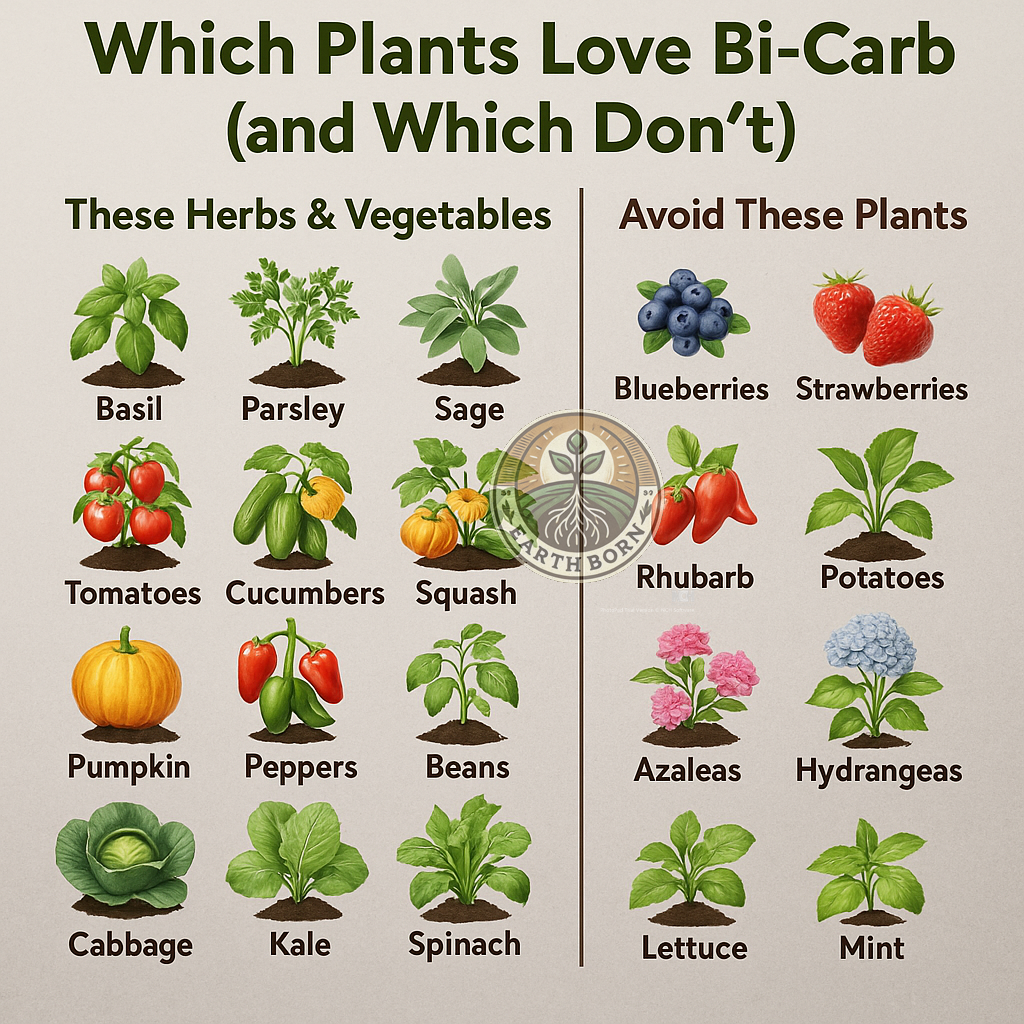
Bi-carb is especially good for plants prone to fungal issues and soft-leaf growth:
- Tomatoes 🍅
- Cucumbers 🥒
- Squash & Zucchini
- Pumpkins 🎃
- Peppers & Chillies 🌶️
- Cabbage, Kale & Spinach 🥬
- Lettuce 🥗
- Beans & Peas 🌱
🌿 And These Herbs Love It Too
Use bi-carb sparingly as a leaf spray for:
- Basil – helps prevent leaf spot and mildew
- Parsley – keeps foliage clean
- Sage & Oregano – deters mildew and pests
- Thyme & Marjoram – improves leaf health in humid weather
- Mint – prevents fungal growth and deters bugs
💧 How To Use It
Mix up a gentle bi-carb spray:
👉 1 tablespoon bicarbonate of soda
👉 1 teaspoon mild liquid soap (unscented)
👉 1 litre water
Shake well and spray on leaves early morning or late afternoon (never under hot midday sun). Repeat weekly as a preventative spray. 🌤️
🚫 Plants That Don’t Like Bi-Carb
Some plants prefer slightly acidic soil and don’t respond well to bi-carb’s alkalinity:
- Blueberries 🫐
- Strawberries 🍓
- Cranberries
- Rhubarb
- Potatoes 🥔
- Parsley root
- Azaleas, Hydrangeas, and other acid-lovers
For these, stick to organic compost or mulch instead — avoid sprays or soil treatments containing baking soda.
🌸 Earthborn Note
Bi-carb works best as a natural prevention, not a cure.
It’s gentle, eco-friendly, and helps you maintain a healthy, balanced garden ecosystem 🌱✨
A small step toward a greener Earth, one spray at a time 💧