🌱 Introduction and history
The Carrot (Daucus carrota) is a familiar and much-loved vegetable in South African gardens and kitchens alike. Though not indigenous to Africa, it has been embraced here for centuries due to its versatility and nutritional benefits. Originally, carrots were purple or yellow, with the now-popular orange variety being a relatively recent development linked to Dutch growers in the 17th century.
Carrots have been a staple in many cultures, prized for their sweet root that can be eaten raw, cooked, or juiced. Their popularity stems from being easy to grow, delicious, and packed with beneficial nutrients. Whether you’re a seasoned gardener or a beginner, carrots offer a rewarding crop that suits our South African climate beautifully.
💊 Medicinal Benefits
- May support improved vision thanks to its beta-carotene content
- May help boost the immune system with vitamins and antioxidants
- May aid digestion due to its fibre content
- Traditionally used for general health tonics and maintaining skin health
📅 When to Plant in South Africa
| Province | Best sowing months | Notes |
|——————|—————————-|——————————————-|
| Western Cape | August – October | Coastal, mild winters, sow seeds directly |
| Eastern Cape | August – October | Coastal/inland mix, frost possible inland |
| Northern Cape | August – September | Hot, dry; sow early to avoid summer heat |
| Free State | August – September | Inland, frost risk; sow early for best results |
| KwaZulu-Natal | August – November | Warmer, humid; longer sowing window |
| Gauteng | August – September | Inland, frost risk; sow early |
| Mpumalanga | August – September | Mixed climate, sow early |
| Limpopo | August – September | Warm, frost rare; sow early |
| North West | August – September | Dry, inland; sow early |
🏡 Where to Plant
Carrots thrive best when planted directly in the ground where the soil is loose and deep. They do well in garden beds but can also be grown in containers at least 30 cm deep and 20 cm wide to allow the roots to develop properly. A greenhouse or tunnel can extend the growing season, especially in cooler regions or during early spring sowing.
Choose a sheltered spot to protect carrots from strong winds, which can disturb the soil and damage young seedlings. Microclimates with good sun exposure but some afternoon shade in hotter areas will help prevent bolting.
🌞 Soil, Water & Sunlight Requirements
✅ Soil: Well-drained sandy loam with a pH of 6.0 to 6.8 is ideal. Avoid heavy clay soils that restrict root growth. Loosen soil deeply before planting.
✅ Sunlight: Full sun for at least 6 hours a day is best for sweet, healthy roots.
✅ Water: Keep soil moist but not soggy. Regular watering is important, especially during germination and dry spells.
✅ Fertilize: Apply a balanced fertiliser every 2-3 weeks to support steady growth, avoiding excess nitrogen which encourages leafy tops over roots.
✅ Spacing: Sow seeds about 5-7 cm apart in rows spaced 20-30 cm apart.
✅ Seeds germinate: Typically 10-14 days at soil temperatures of 15-21°C.
✅ Transplanting: Not commonly done as carrots grow best direct-sown, but seedlings can be transplanted at 3-4 weeks if necessary. Harden off seedlings before moving outdoors.
✅ Maturity height: Usually grows about 15-30 cm tall foliage.
✅ Varieties of the vegetable and easiest/hardest one to grow:
– Easiest: Nantes (sweet, cylindrical, good for beginners)
– Others: Imperator, Danvers, Chantenay, Purple Haze, Little Finger
– Hardest: Some heirloom or long-rooted varieties require very deep, loose soil to avoid forked roots
🍓 Flowers & Fruit
Carrots produce delicate white umbels of flowers (often called Queen Anne’s lace) if left to bolt. Bolting can be triggered by high temperatures, irregular watering or old seed. To prevent bolting, maintain consistent moisture, harvest roots promptly when mature, and consider shade cloth in very hot conditions.
Carrots are grown primarily for their edible root, not fruit. Pollination is done by insects if you allow flowering, but this is usually avoided in the vegetable garden.
🌼 Companion Plants
Carrots pair well with:
– Onions (help repel carrot rust flies)
– Lettuce (shade young carrot seedlings)
– Tomatoes (improve flavour and repel pests)
– Peas (fix nitrogen in soil)
– Rosemary and sage (deter carrot flies)
– Chives (repel aphids)
Avoid planting carrots near dill and parsnips, which may attract similar pests or compete for nutrients.
🐛 Common Pests
- Carrot rust flies
- Aphids
- Carrot weevils
Organic prevention and treatment:
– Use neem oil sprays or insecticidal soap early on
– Hand-pick pests if possible
– Introduce beneficial insects like ladybugs and lacewings
– Use physical barriers such as fine mesh or row covers to prevent egg laying
🧺Harvesting
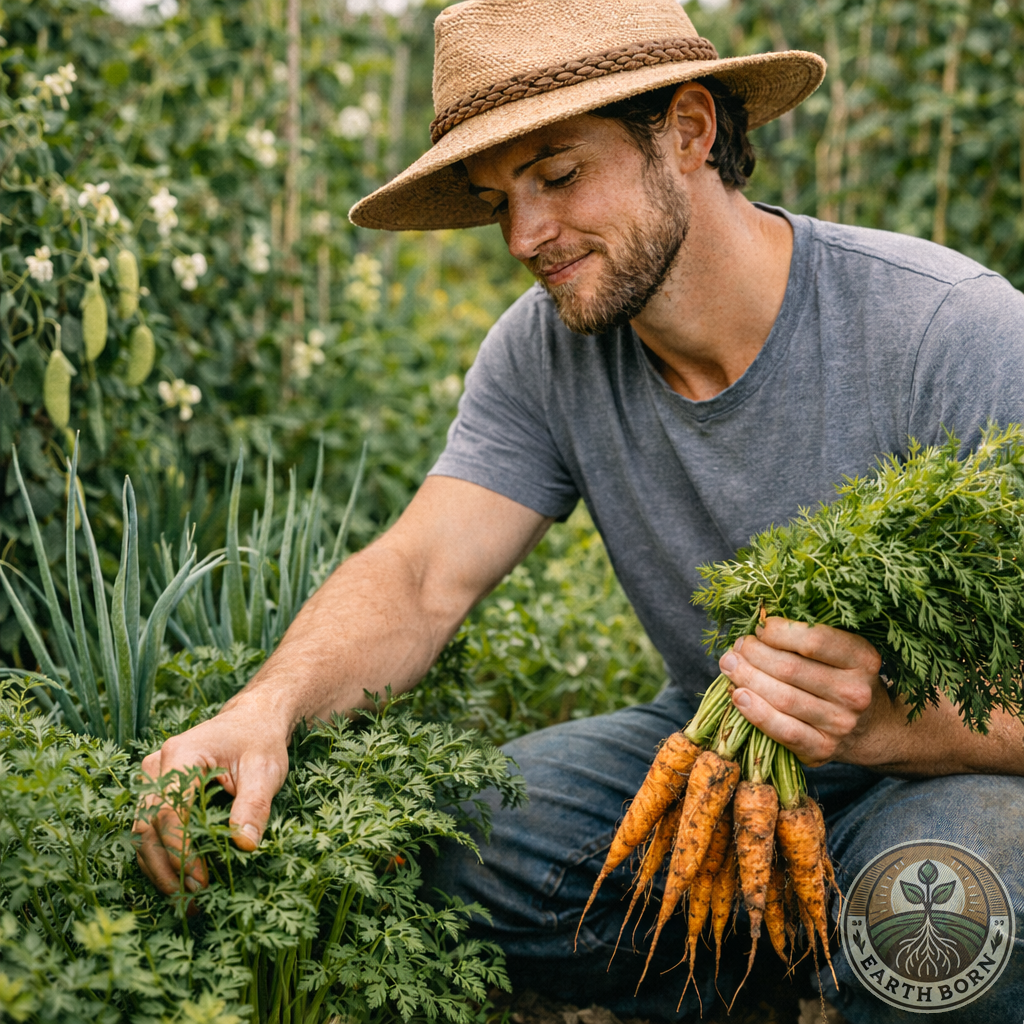
Carrots are ready to harvest 70-80 days after sowing. Harvest during cool parts of the day (early morning or late afternoon) to maintain flavour and crispness. Gently loosen soil around the roots before pulling to avoid breakage.
Harvest regularly to encourage more root growth. This crop is not “cut-and-come-again” as the edible portion is the root.
🫙Storage
Store fresh carrots in the refrigerator wrapped in a damp paper towel or kept in a perforated plastic bag to maintain moisture. Alternatively, place carrot bunches in a jar with water like flowers, changing water regularly.
Carrots freeze well after blanching and can also be stored by drying or pickling.
🧪 How to Use as Medicine
- Carrot juice: Blend 1-2 medium carrots with water for a vitamin-rich drink. Start with small amounts if new to juicing.
- Raw slices: Eating raw carrots regularly may support digestion and eye health.
- Carrot tea: Simmer chopped carrot roots in boiling water for 10 minutes, strain and sip.
- Poultice: Mashed cooked carrot applied externally may soothe minor skin irritations (test for allergies).
Avoid excessive intake if prone to allergies. Pregnant or breastfeeding women should consult a healthcare professional before using medicinal preparations.
💊 Benefits of eating organic verses store bought
- Fresher taste and better texture from homegrown or organic carrots
- Lower pesticide residues compared to conventional produce
- Supports healthy soil and biodiversity in your garden
- Encourages sustainable local food systems and reduces carbon footprint
- Often richer in nutrients due to natural growing methods
- Promotes safer food for children and sensitive individuals
🎉 Fun Fact
Carrots were originally purple and yellow before the orange variety was cultivated by Dutch growers in the 1600s as a tribute to the House of Orange.
⚠️ Caution
Carrots may cause allergic reactions in some individuals. People with known allergies to carrots or related plants should avoid using medicinal preparations. Large amounts of carrot juice can cause carotenemia (yellowing of the skin), which is harmless but can be mistaken for jaundice.
Consult a qualified professional before using carrots medicinally, especially if pregnant, breastfeeding, or on medication.
📣 Call to action
Share your favorite recipe/remedy that uses Carrot 👇