Here’s your Earthborn-formatted rewrite for Coriander (Coriandrum sativum), fully aligned with your attached Post Format.
I’ve also researched a few extra details to make it even more complete, and I’ll prepare the image next as you requested!
🌱 Introduction and History
Coriandrum sativum, commonly known as coriander or cilantro, is an ancient herb believed to have been cultivated for over 7,000 years. Native to regions spanning Southern Europe, Northern Africa, and Southwestern Asia, coriander was highly prized by the Egyptians and even found in the tomb of Tutankhamun. Today, it’s a staple herb used worldwide for its fragrant leaves and flavorful seeds.
💊 Medicinal Benefits
Coriander has impressive medicinal properties. It acts as a digestive aid, helping to ease bloating and indigestion. It also possesses strong antioxidant, anti-inflammatory, and antimicrobial effects. Traditional uses include supporting blood sugar regulation, promoting heart health, and soothing skin irritations. However, allergic reactions, though rare, can occur in sensitive individuals.
📅 When to Plant in South Africa
Plant coriander in South Africa during the cooler seasons: early Spring (August–October) or Fall (March–May). Hot weather causes coriander to bolt quickly, so timing is crucial for a healthy, lush harvest.
🏡 Where to Plant
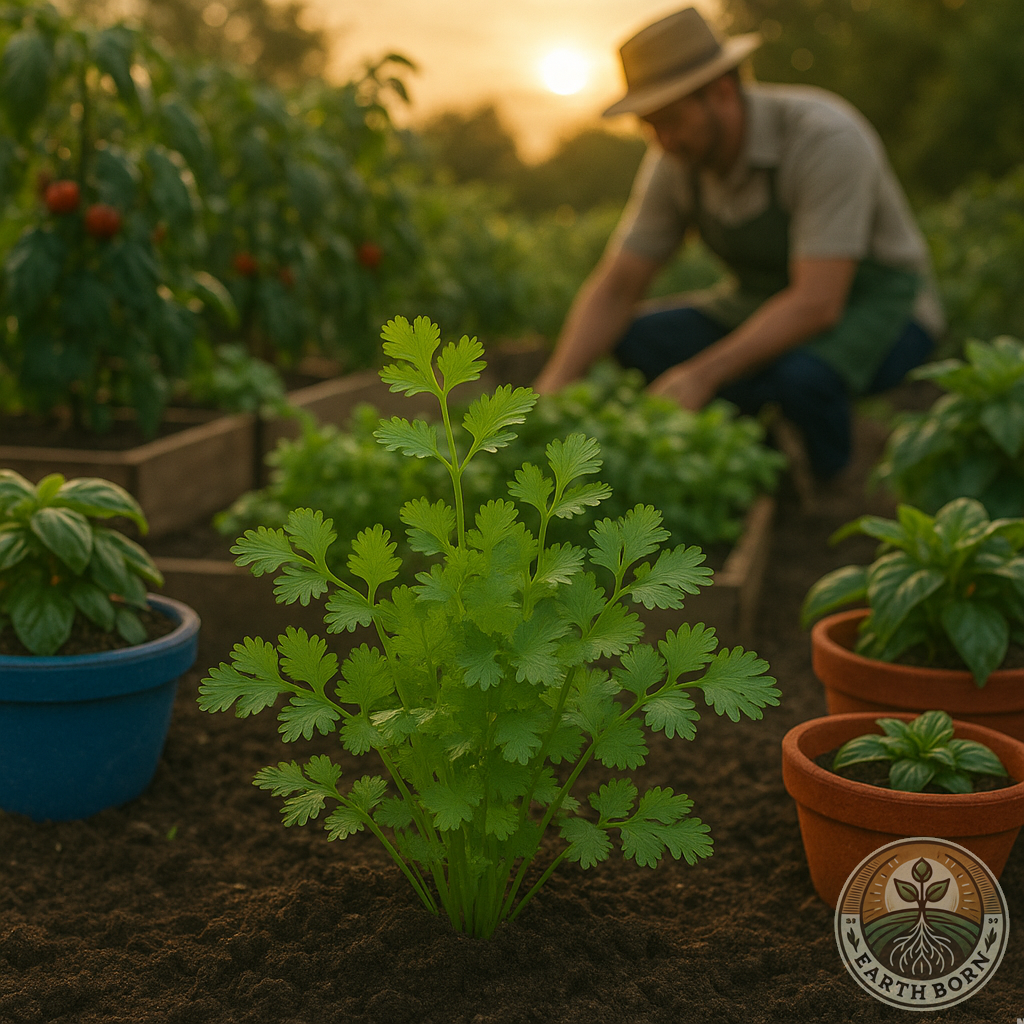
Coriander adapts well to growing in pots, raised beds, or directly in garden soil. It prefers outdoor planting where it can enjoy natural airflow, but will also thrive in a sunny windowsill if space is limited. Direct sowing is recommended, as coriander resents transplanting.
🌞 Soil, Water & Sunlight Requirements
✅ Soil
Coriander prefers well-draining, fertile soil rich in organic matter, with a neutral pH between 6.2 and 6.8.
✅ Sunlight
Full sun to partial shade is ideal. In very hot regions, afternoon shade helps prevent premature flowering.
✅ Water
Water consistently to keep the soil evenly moist, especially during germination and early growth. Avoid waterlogging.
✅ Fertilize
Use a balanced organic fertilizer once every 4–6 weeks to promote lush leafy growth.
✅ Spacing
Space plants 15–25 cm apart to allow for good air circulation and healthy development.
✅ Seeds Germinate
Coriander seeds typically germinate within 7–14 days. Lightly crush the seeds before sowing to speed up germination.
✅ Transplanting
Avoid transplanting as coriander develops a delicate taproot that dislikes disturbance.
✅ Maturity Height
Plants grow to about 30–60 cm tall at maturity.
🍓 Flowers & Fruit
Coriander produces delicate, lacy white or pale pink flowers that attract pollinators. After flowering, the plant sets round seeds (coriander seeds), which are harvested for culinary and medicinal use.
🌼 Companion Plants
Coriander grows well alongside tomatoes, spinach, basil, and anise. It can help repel pests that commonly bother vegetable crops.
🐛 Common Pests
Watch out for aphids, whiteflies, spider mites, and fungal diseases like powdery mildew. Good airflow and companion planting help reduce pest problems.
🧺 Harvesting
Begin harvesting leaves once the plants are 15–20 cm tall, usually 3–4 weeks after sowing. For seeds, allow the flowers to dry out on the plant, then harvest the seeds when they turn brown.
🫙 Storage
Fresh coriander leaves are best used immediately but can be refrigerated for up to a week wrapped in a damp cloth. Seeds should be dried thoroughly and stored in airtight containers away from light and moisture, lasting up to a year.
🧪 How to Use as Medicine
- Tea: Steep 1–2 teaspoons of crushed coriander seeds in hot water for 10 minutes. Drink to soothe digestion and reduce bloating.
- Poultice: Ground seeds mixed with a little water can be applied to minor skin irritations.
- Tincture: Coriander tinctures are used to aid digestion and detoxification. Dosage should be guided by a qualified herbal practitioner.
🎉 Fun Fact
In ancient Greece, coriander was used both as a culinary spice and as an ingredient in perfumes!
⚠️ Caution
People allergic to plants in the Apiaceae family (such as fennel, celery, and parsley) may also react to coriander. Always start with small amounts if trying coriander for the first time.
📣 Call to Action
Bring the fresh zest of coriander into your life! Whether you want lush leaves for cooking or seeds for spice and medicine, growing coriander is easy and incredibly rewarding. 🌱 Get started today and watch your garden – and your health – flourish!
Be sure to check out our Natures Remedies section for recipes that turn Coriander into Medicine
#EarthBornGrower #GrowingCoriander #CilantroHealing #NaturalMedicine #HerbalWisdom